
Where sin has teeth and mercy costs blood.
Anthony Kincaid writes dark fiction about broken people, haunted places, and the consequences that come due when the past refuses to stay buried.
These stories move through plague roads, Southern swamps, crime scenes, ruined churches, old sins, family curses, and the thin line between judgment and grace.
Some characters run from what they’ve done.
Some are hunted by what they refuse to confess.
Some find redemption.
Some fall deeper into the fire.
This is not clean fiction for clean people.
Grit. Blood. Faith. Fear. Consequence. Light bleeding through the cracks.
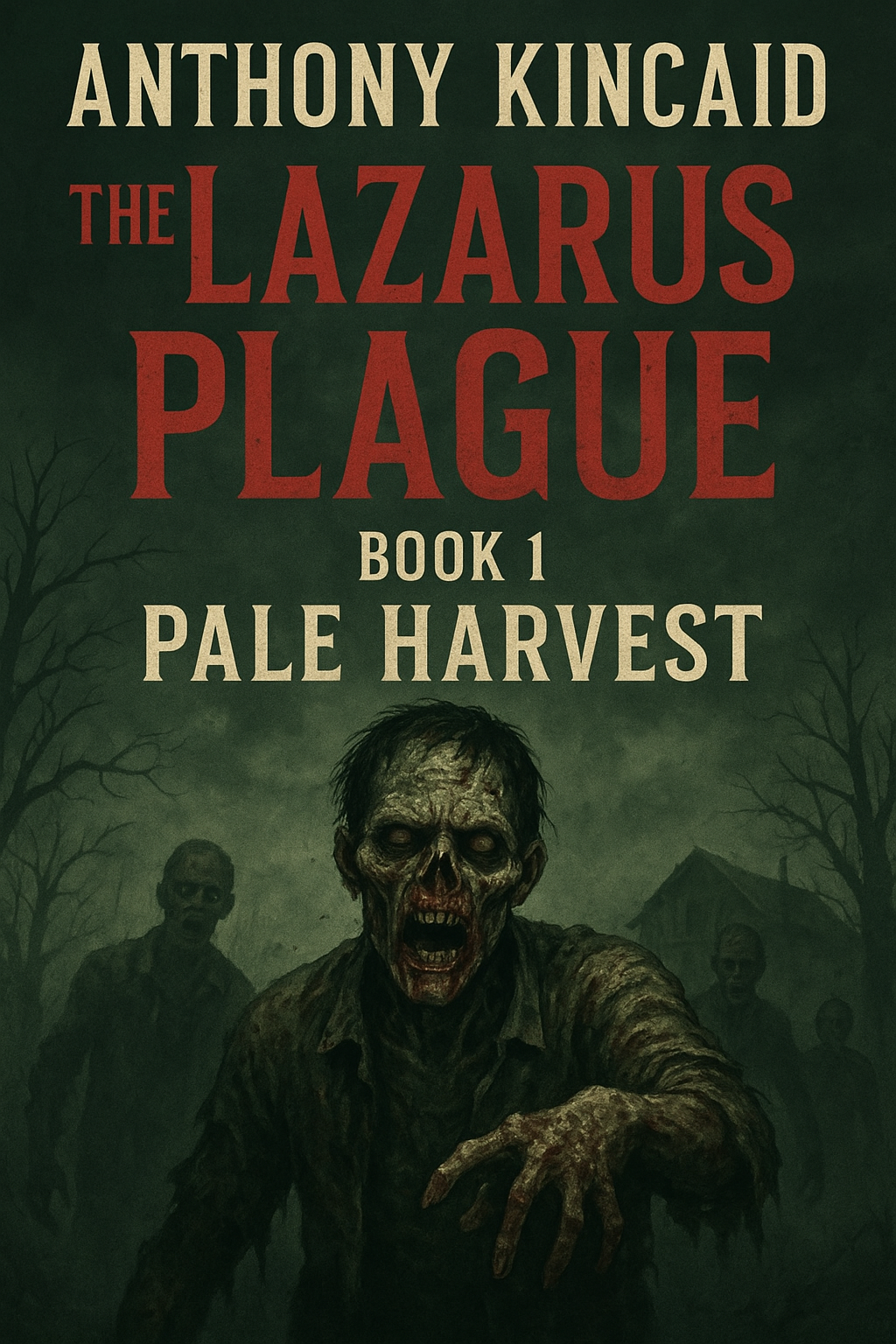
Pale Harvest
In a world where death is no longer the end, survival becomes a battle against the living, the dead, and the darkness within.
It begins in a forgotten Mississippi diner, where Solomon Cross, a paramedic, walks into what should be a routine call and steps straight into hell. A new airborne plague has escaped its creators, killing the infected and bringing them back as ravenous, relentless predators.
Within weeks, society begins to collapse. Highways choke with abandoned cars. Cities fall silent. The dead fill the roads. And the living prove just as dangerous as the things hunting them.
As Solomon fights his way through a broken America, he is forced into impossible choices that test his faith, his mercy, and the kind of man he is willing to become. The farther he travels, the clearer one truth becomes: surviving the plague may cost more than blood.
The dead are rising.
The world is dying.
And Solomon Cross is running out of road.
The Lazarus Plague: Pale Harvest is a brutal, character-driven post-apocalyptic horror novel about grief, survival, faith, and the thin line between protecting your humanity and losing it. Perfect for readers who like their apocalypse raw, tense, and haunted by more than monsters.
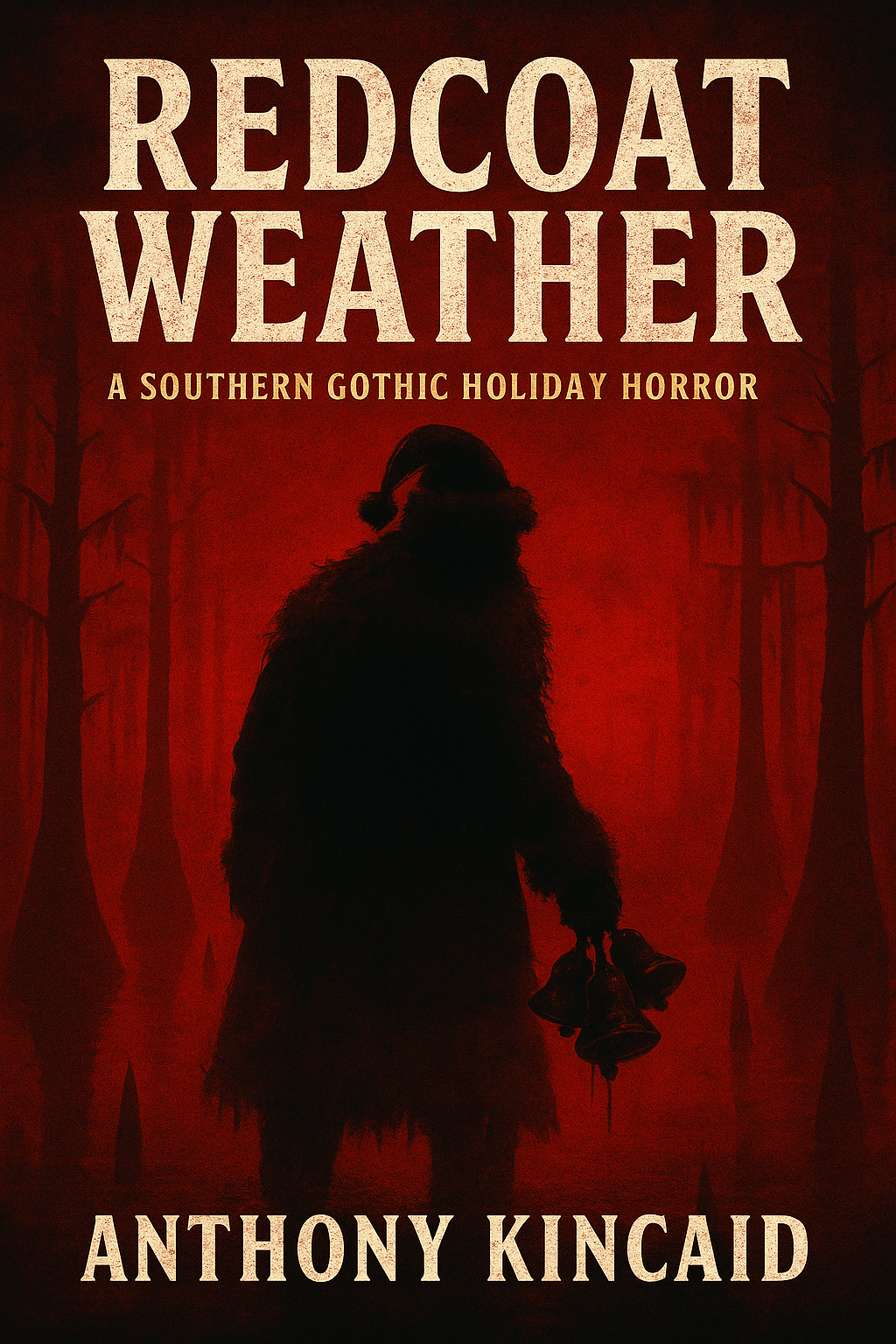
Redcoat Weather
In Cypress Parish, Christmas doesn’t bring joy — it brings the fog.
Every December, the swamp exhales a red mist that crawls between the cypress knees and settles against the old houses like a warning. Folks in town whisper about Redcoat, the shadow that comes hunting when the fog turns crimson… a figure born from guilt, grief, and the rot people try to hide.
Isaac Reed is just trying to hold his family together for one quiet Christmas Eve. But when the red fog pulses through the pines and an old secret claws its way back to his doorstep, he realizes the night isn’t here to celebrate. It’s here to collect.
Part Southern Gothic, part holiday nightmare, Redcoat Weather blends swamp folklore, creeping dread, and the kind of darkness that follows a person home. This is Christmas the way Cypress Parish remembers it: humid, haunted, and hungry.
Perfect for fans of atmospheric horror, unsettling legends, and winter tales with bite.
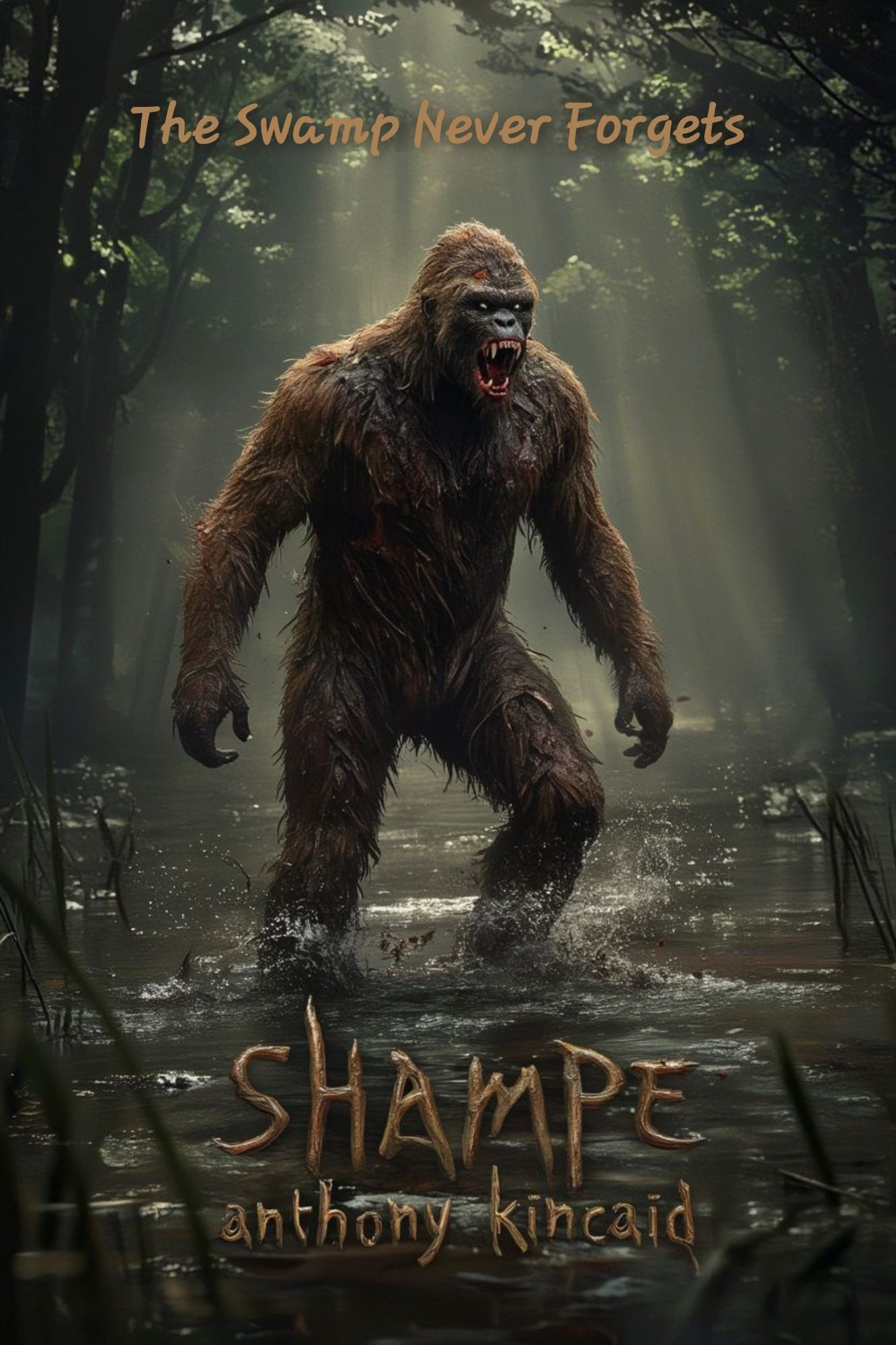
Shampe
In the Mississippi backwoods, there is a stretch of water the Choctaw once called Chatawa — the Hunting Ground.
For generations, people have entered that swamp and never come back: boys on their first hunt, deserters hiding from the Civil War, bootleggers, and desperate families looking for something to eat. The stories always return the same way.
Torn camps.
Blood on the trees.
No bodies.
And one whispered name.
Shampe.
When Bruce McMasterson, a world-famous big-game hunter with a taste for impossible trophies, finds a grainy video claiming to show the creature, he sees opportunity, not warning. To him, Chatawa is just another notch waiting for his rifle.
But the town he flies into knows better.
The sheriff won’t joke about the swamp. The gas station wall is crowded with missing faces. And an old Choctaw elder insists Shampe is not an animal at all, but something older — something that remembers every sin spilled into its soil.
Bruce ignores them.
He goes in anyway.
What follows is a slow, suffocating hunt where the rules no longer belong to him and the line between legend and judgment begins to blur.
Shampe is a Southern folk-horror tale about pride, old stories that refuse to die, and a swamp that keeps perfect score.
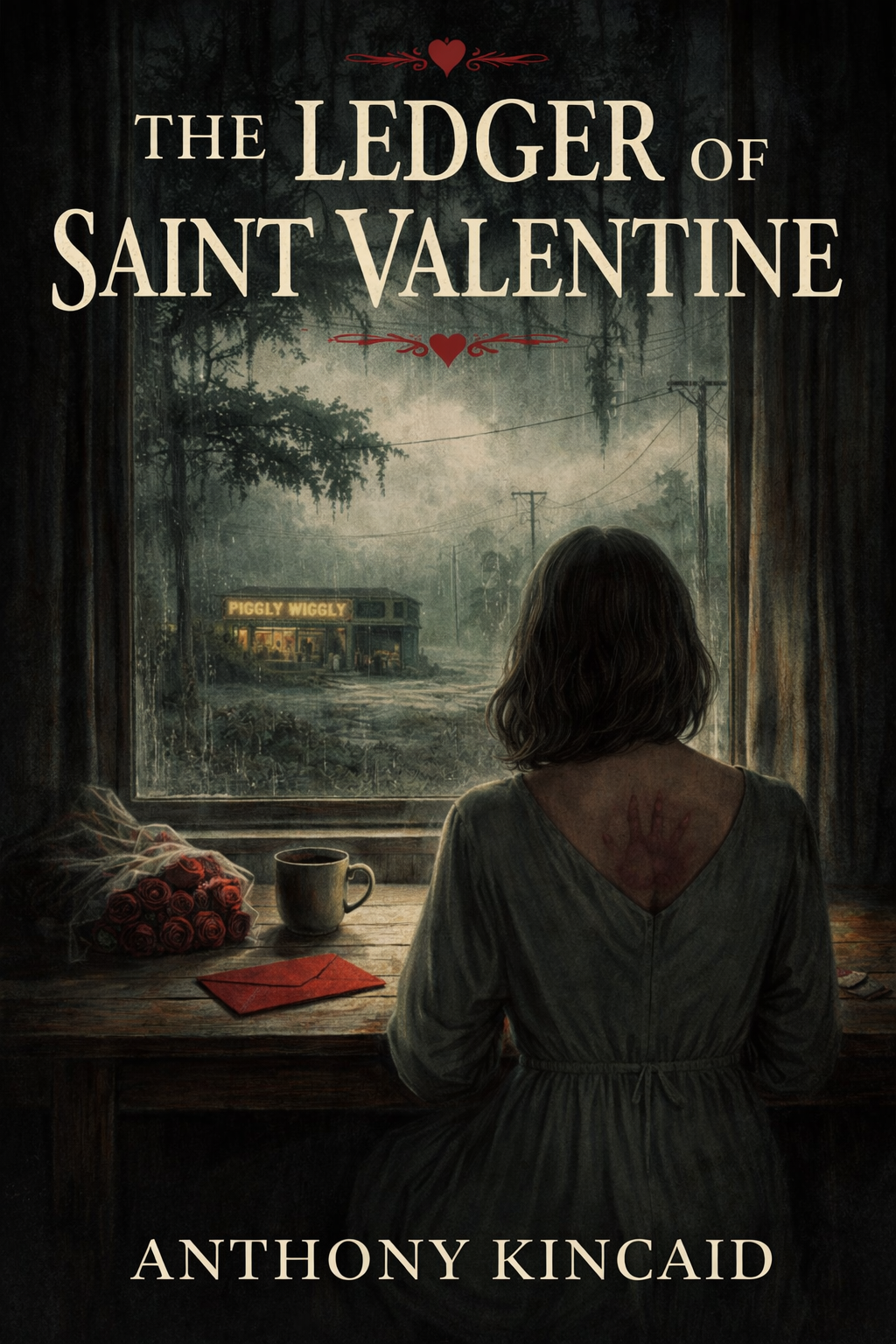
The Ledger of Saint Valentine
In Cypress Parish, Valentine’s Day doesn’t celebrate love.
It audits it.
Every February, the air grows heavy, and the town begins to notice what has been left unsaid: forgotten cards, lingering silences, and the quiet distances that form between two people sharing the same bed.
Folks in Cypress Parish know better than to call it a curse. They call it the ledger — the reckoning that comes when affection is withheld and truth goes unpaid.
A woman wakes on Valentine’s morning to an empty table and a marriage that insists it is fine. But when bruises appear without violence and the house itself begins to listen, she realizes the parish is not asking for romance.
It is asking for honesty.
As the pressure builds and old stories surface, she must choose how the account will be settled: through denial, performance, or the one payment the town accepts without mercy.
Truth.
Part Southern Gothic and part quiet horror, The Ledger of Saint Valentine is a slow, suffocating tale of emotional debt, unspoken loneliness, and the cost of pretending everything balances.
This is Valentine’s Day the way Cypress Parish remembers it:
damp,
intimate,
and unforgiving.
Perfect for readers who favor atmospheric horror, folk-tinged dread, and stories where the scariest thing is what finally gets said.
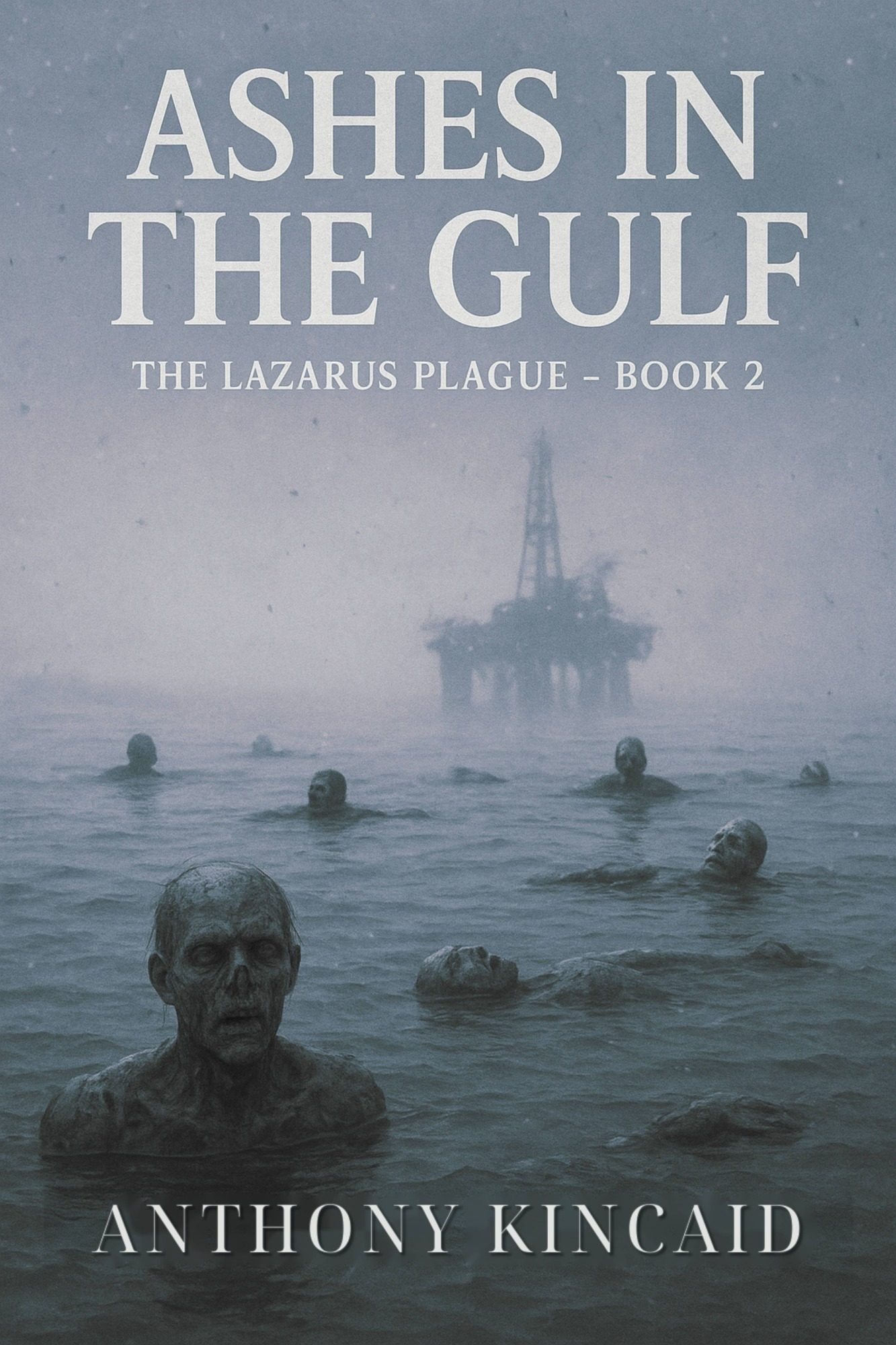
Ashes in the Gulf
The Gulf Coast is a graveyard, and the tide is bringing the dead back.
Solomon Cross has survived the road, but survival has not made him whole. Haunted by the cost of everything behind him, he pushes toward the Gulf with the few people still depending on him, desperate for refuge in a world that keeps taking more than it gives.
But the Gulf offers no safe harbor.
Its waters are infested with the drowned — bloated, ravenous horrors that wash ashore with the tide. Its islands are ruled by fear, hunger, and desperate survivors who have learned that trust is a currency few can afford.
As Solomon is pulled deeper into the ruins of the coast, guilt and rage threaten to consume what remains of his humanity. Beyond the shoreline, a new nightmare waits: a monstrous floating fortress where the last pieces of the old world are bartered, broken, and sold.
To protect what remains, Solomon must face the horrors in the water, the evil in other men, and the darkness rising inside himself.
But in a world drowned in death, the line between savior and monster is razor-thin.
And the ashes of the old world may yet smother the last embers of the new.
Already Paid
He knows what he believes.
He knows the words. Grace. Forgiveness. Finished. Paid in full.
But knowing a truth and living free under it are not always the same thing.
After years of carrying the quiet damage of his past, a man finds himself sitting in church on Easter morning, saying the right words with everyone else while feeling the weight of something he cannot explain. He believes Christ has paid the debt. He believes the gospel is true. Still, somewhere deep inside, it feels like something remains unsettled.
As memories from his childhood begin to surface — a broken home, silence where comfort should have been, and anger that once gave shape to his unbelief — he is forced to confront the burden he has mistaken for responsibility.
Already Paid is a quiet, faith-centered story about guilt, grace, memory, and the hard work of receiving what Christ has already finished. It is not a story about earning forgiveness. It is about learning to stop carrying what was never yours to carry.
Some debts do not need repayment.
Some wounds do not need denial.
And some truths only become real when we finally stop trying to pay twice.
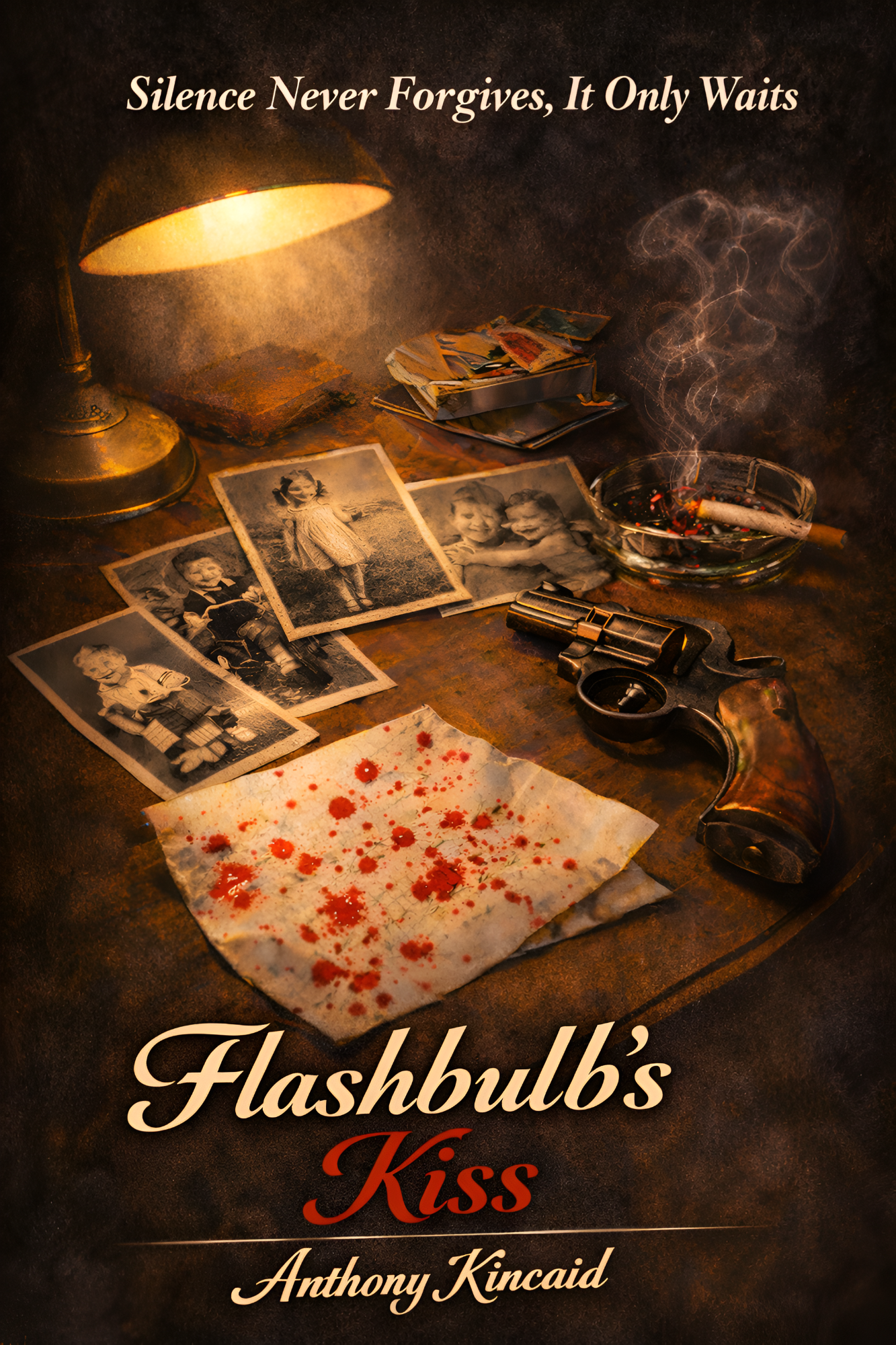
The Flashbulb's Kiss
Anthony “Tony Two-Tone” Capelli used to be the man Chicago’s underworld called when something ugly needed cleaning up.
Then one brutal night took everything from him, and the city buried him with the rest of its ghosts.
Five years later, he is Tony Ellis, a quiet schoolteacher in small-town Mississippi. His days are spent helping kids build model rockets, grading papers, and pretending the blood on his soul washed off somewhere between Chicago and the pines.
But the past does not stay buried.
Anonymous calls come in the middle of the night, with someone breathing his real name through the line. Letters arrive that no one should be able to send. Strange cars linger near the schoolyard. And the fragile life Tony has built around his students begins to crack one coincidence at a time.
As old names circle closer, Tony is forced toward the line he swore he would never cross again.
Stay the teacher his kids believe in.
Or become the man he used to be and stop the kind of monsters he once worked beside.
The Flashbulb’s Kiss is a grim, pulpy noir about sin, second chances, buried violence, and what happens when the light that finds you might be judgment instead of grace.
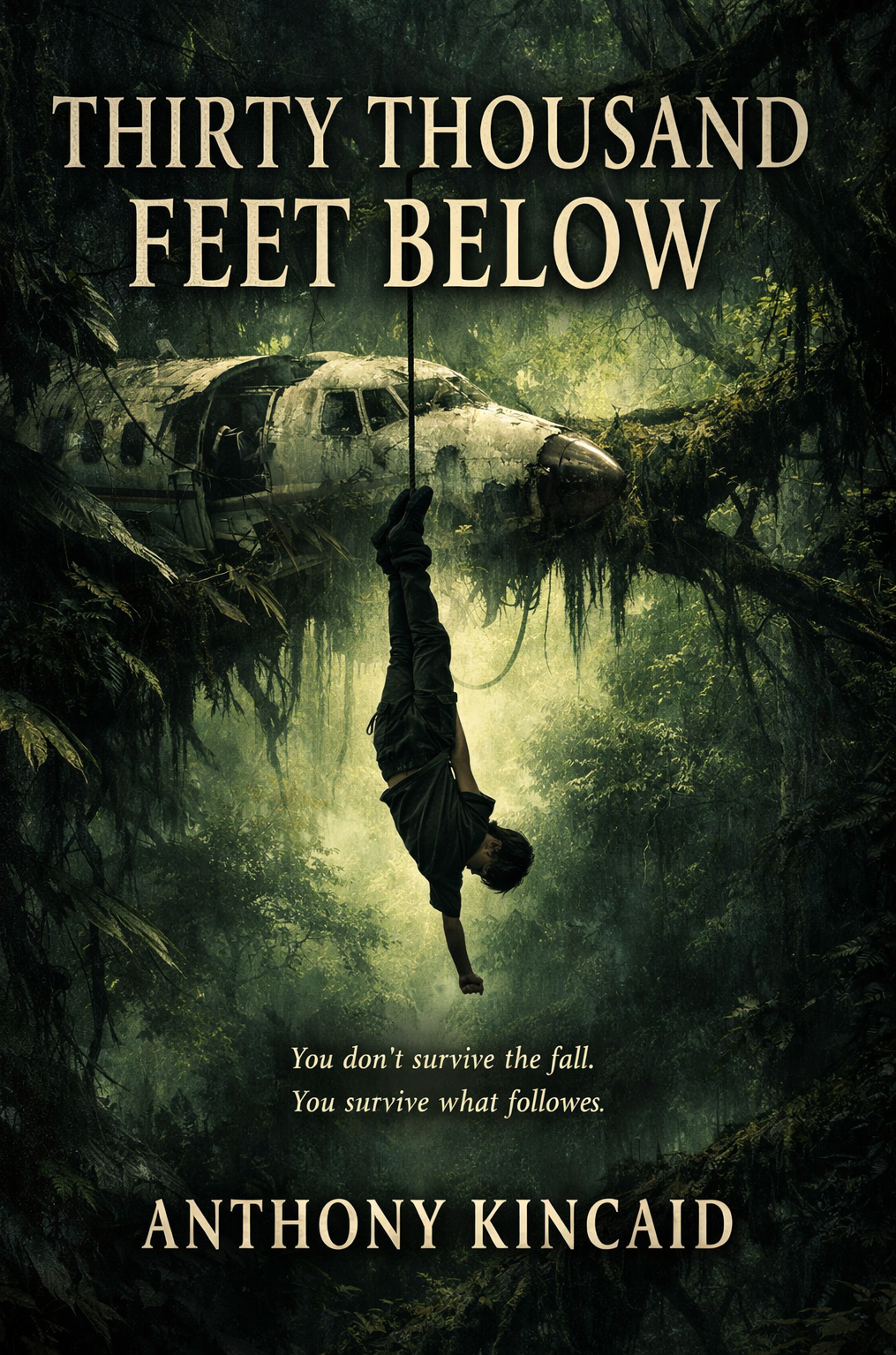
Thirty Thousand Feet Below
Sixteen-year-old Tony is supposed to be spending the summer with his grandmother in the Florida Keys. Despite his mother’s warnings about a dangerous storm moving across the Gulf, he boards a small plane convinced the weather is nothing more than an inconvenience.
But when the flight goes violently wrong, Tony awakens injured, disoriented, and stranded in a place that feels impossibly far from the world he knows. With limited supplies, fractured memories, and no clear way home, survival becomes more than a matter of escaping the wreckage. As the swamp closes in around him, Tony begins to question not only where he is—but what really happened to him.
Thirty Thousand Feet Below is a tense, atmospheric survival-horror short story about fear, isolation, and the terrifying possibility that some experiences follow you long after you think they’re over.
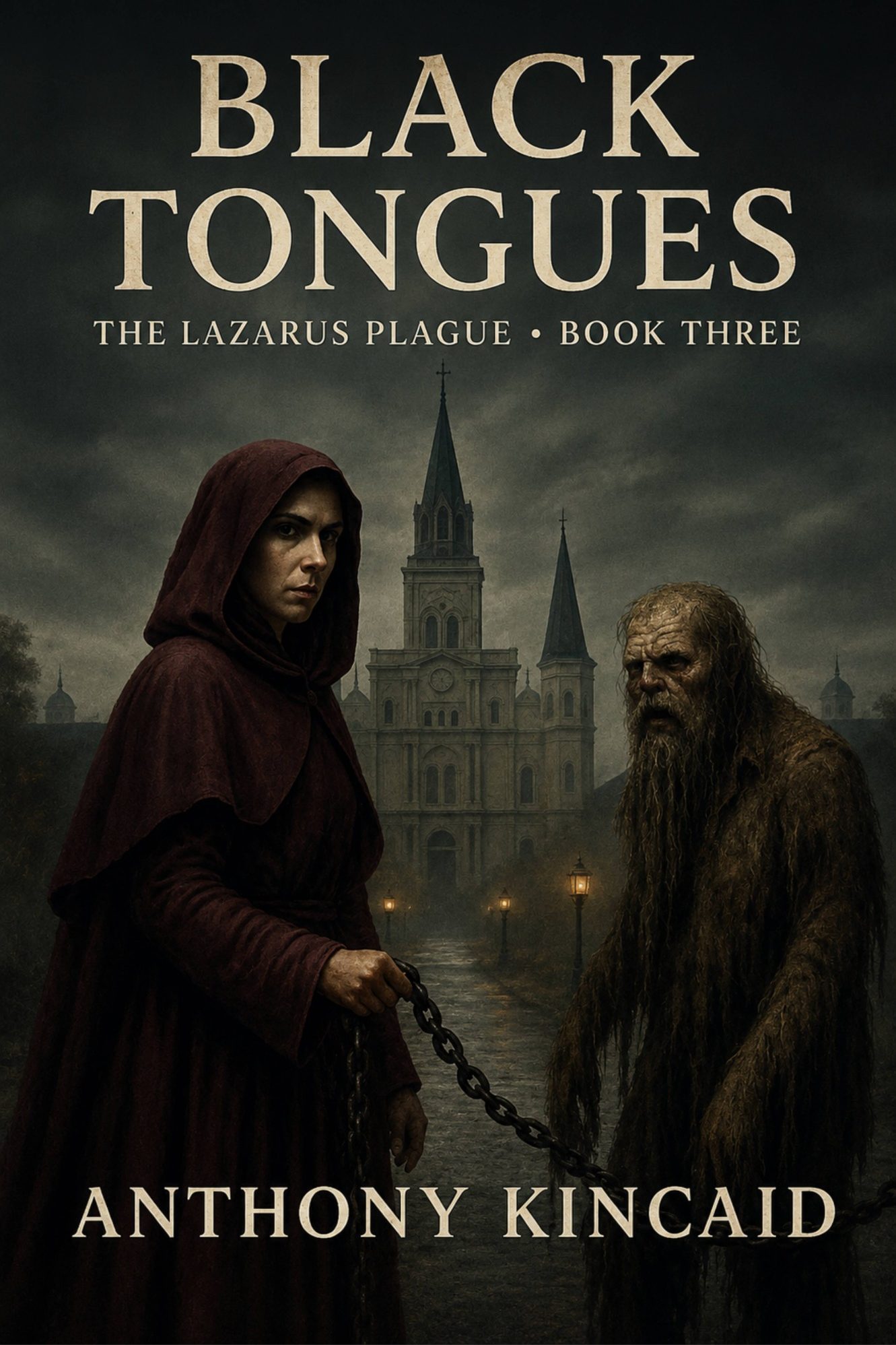
Black Tongues
The Gulf has spat them out, but the shore offers no refuge.
Solomon Cross has survived the water, the drowned, and the horrors waiting beyond the coast. But survival has only carried him deeper into a world that keeps changing its rules.
Now the road leads into the drowned ruins of Louisiana — a place of flooded roads, rotting churches, and swamps thick with things that move slower than the dead should. Here, the plague has taken on a new shape. The drowned are patient. The air is sweet with decay. And something in the darkness seems to be learning.
Beyond the bayous, New Orleans has become something else entirely: a city of bones, hunger, ritual, and power. In its ruins, a new order is rising from the ashes, twisting fear into faith and turning survival into worship.
To protect what remains, Solomon must enter a place where cruelty wears the mask of salvation and the line between deliverance and damnation has been washed clean away.
But the deeper he goes, the more one truth becomes impossible to ignore:
the dead are not the only things changing.
The Lazarus Plague: Black Tongues continues Solomon Cross’s journey into a darker, stranger corner of the plague-ravaged South — where faith is corrupted, monsters wear human faces, and survival may demand more than a man can afford to give.
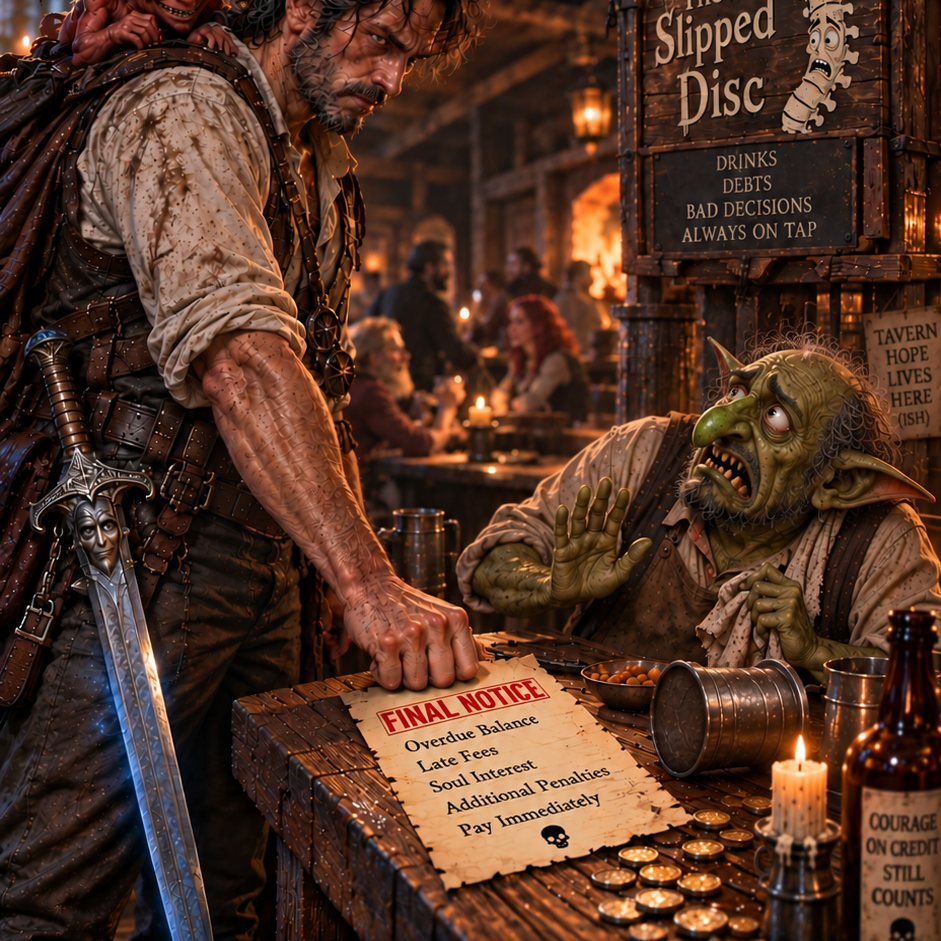
Lich better Have My Money
Axel Grease has three problems: bad knees, unpaid debts, and a cursed sword with opinions.
Then a goblin hands him a haunted coupon.
Now the entire kingdom of Aldermarch is forty million gold crowns in debt to Rig R. Mortis, a lich financier specializing in soul lending, final expenses, and light necromancy—and somehow Axel has been volunteered to collect.
His team is less than ideal.
There’s Penny Dreadful, a retired necromancy accountant who wants two weeks of paid vacation.
Sir Render, a painfully decent paladin who seems to have developed a suspicious amount of concern for Penny.
Phil A. O’Fish, a talking sword with the emotional stability of a tavern brawl.
Can Doo, a motivational imp who refuses to shut up.
And Axel himself, who has never encountered a terrible decision he couldn’t make worse.
To save the kingdom, they’ll have to survive undead suburbia, weaponized bureaucracy, predatory lending, magical audits, cursed contracts, and the Tomb of Annual Returns.
Because when your creditor is immortal, bankruptcy is not an option.
And neither, apparently, is common sense.
LICH BETTER HAVE MY MONEY is a fast, irreverent fantasy comedy packed with sarcastic heroes, terrible financial decisions, talking weapons, undead capitalism, and enough paperwork to make death seem relaxing.
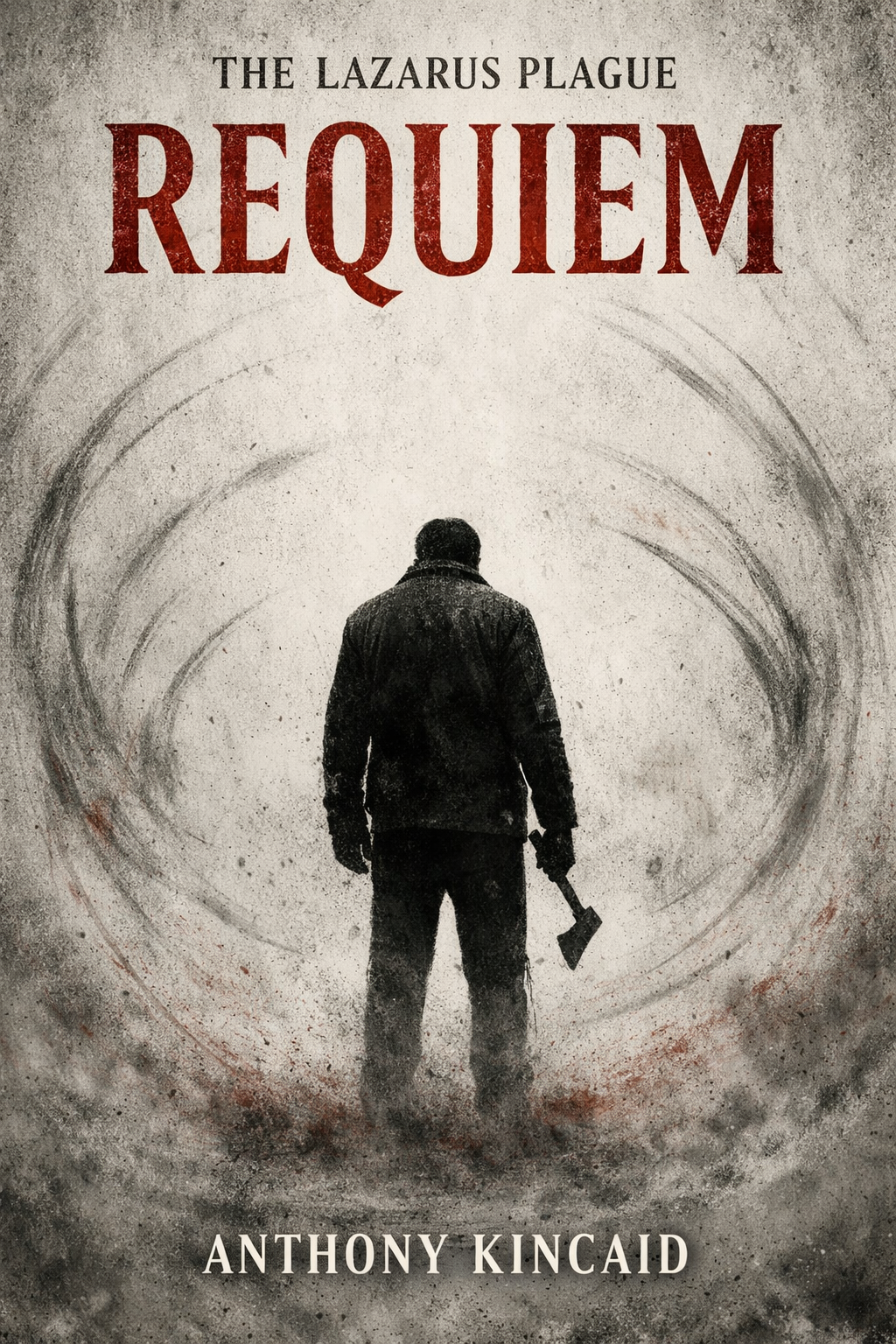
Requiem
The road has carried Solomon Cross back to where the nightmare began.
Mississippi is quieter now, but it is not empty. The towns are rotting beneath kudzu. The churches have gone hollow. And wherever Solomon walks, the dead are no longer wandering.
They are following.
After years of surviving the plague, Solomon begins to recognize a pattern written in blood and abandoned settlements. The people he leaves behind sometimes live. The people he stays beside rarely do. Every road bends toward him. Every gathering becomes a siege. Every grave points back to the same man.
He has spent years believing he was unlucky.
The truth is worse.
Solomon is not merely moving through the plague. He may be part of the machinery driving it—an invisible signal drawing the infected across the ruined South and turning his survival into a death sentence for anyone who comes near him.
With Nora Hale’s cold diagnosis confirming his worst fear, Solomon must stop searching for rescue, forgiveness, or a cure. The only question left is whether the storm following him can be contained—and what must remain at its center to hold it there.
No army is coming.
No miracle is waiting.
And saving what remains of the world may require Solomon Cross to finally stop running.
The Lazarus Plague: Requiem brings Solomon’s journey to its bleak and haunting conclusion—a story of guilt, containment, and sacrifice without witnesses, where heroism is not measured by who survives, but by how far one man is willing to go to ensure the damage ends with him.